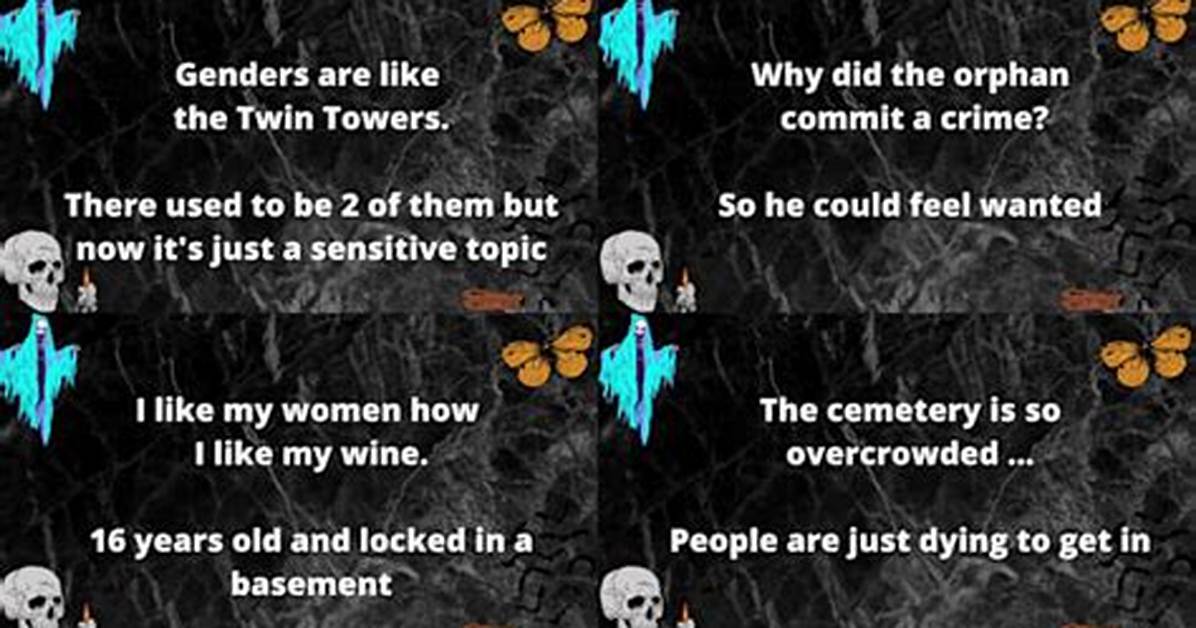
Humor has always been a complex and often contentious topic, especially when it comes to offensive jokes. In 2024, the landscape of comedy is evolving, prompting comedians, audiences, and content creators to reevaluate what is acceptable in humor. As society becomes more aware of the impact of words, understanding the nuances around offensive jokes is crucial for both creators and consumers of comedy. This article delves into the intricacies of offensive jokes in 2024, examining their historical context, current trends, and the ongoing debate surrounding political correctness and freedom of expression.
In recent years, the rise of social media and the internet has amplified discussions about humor and its implications. What was once considered funny may now be deemed offensive, leading to backlash or cancellation for those who cross the line. This shift has led to a fascinating evolution in the comedy world, where the challenge lies in striking a balance between humor and sensitivity. This article will not only explore the types of offensive jokes that have resurfaced or transformed but will also highlight the importance of context, audience, and intention in delivering humor.
As we embark on this exploration of offensive jokes in 2024, we will consider various perspectives, including those of comedians, audiences, and critics. By examining the dynamics at play, we can better understand how humor evolves in response to societal changes and the importance of fostering respectful dialogue around comedy. Join us as we dissect this controversial yet captivating topic.
The History of Offensive Jokes
Offensive jokes have been part of human culture for centuries, often serving as a means of coping with societal taboos and difficult subjects. From ancient jesters to modern comedians, humor has frequently challenged norms and provoked thought.
Historically, offensive jokes have targeted various marginalized groups, reflecting societal attitudes of the time. For example, during the early 20th century, racial and ethnic humor was common in vaudeville acts and early cinema. These jokes, while often seen as humorous, contributed to harmful stereotypes and social divisions.
As society has evolved, so too has the reception of such humor. The civil rights movement, feminist movements, and LGBTQ+ rights advocacy have significantly influenced the boundaries of acceptable comedy. The backlash against offensive jokes has prompted comedians to reassess their material and consider the implications of their words.
Types of Offensive Jokes
Understanding the different types of offensive jokes can help contextualize the discussions surrounding them. Here are some common categories:
- Racial Jokes: Often perpetuate stereotypes and can be deeply hurtful.
- Sexist Jokes: Target women or reinforce gender stereotypes.
- Dark Humor: Explores taboo subjects like death or illness, often at the expense of sensitivity.
- Political Jokes: Satirize political figures or ideologies, which can alienate certain audiences.
While some may argue that these jokes serve as a form of social commentary, others contend that they perpetuate division and harm.

